

A NEW MODEL FOR NEW MUSICALS
I’m staging a revolution.
I recognize that sounds grandiose for someone who plans to direct a low-budget movie musical. Particularly when that musical is a rock adaptation of Henry Fielding’s 1749 comic novel, The History of Tom Jones. How can an independent film with a Monty Python-style sensibility and Meat Loaf-style music possibly be revolutionary?
It can by creating a genre that doesn’t exist, opening new horizons for artists outside the mainstream.
The spark of my revolutionary spirit ignited in 2017, when I directed the off Broadway production of Bastard Jones, which I wrote with composer-lyricist Amy Engelhardt, formerly of the indie band The Bobs.
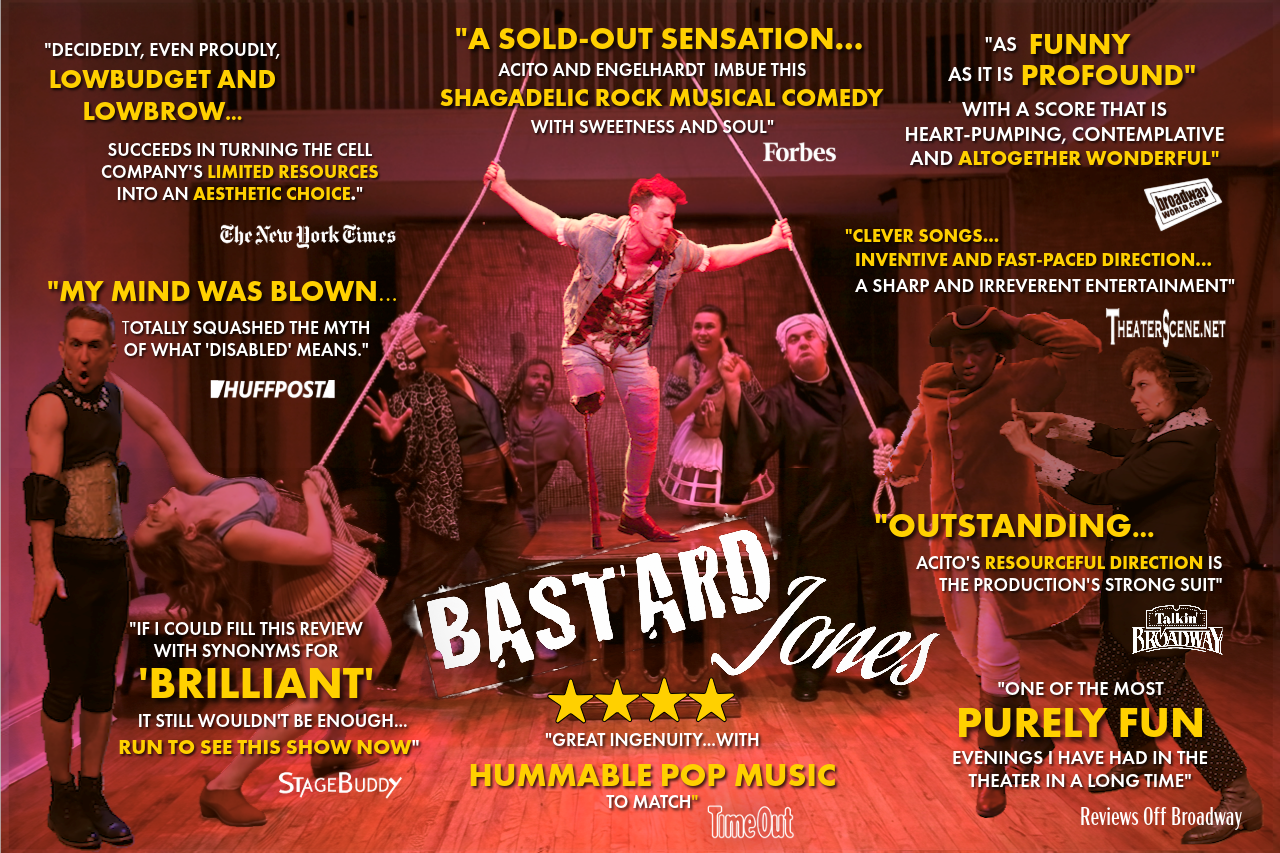
Sold-out houses and the best reviews of our careers weren’t enough to get a producer onboard. At a minimum, the show needed $1-2 million to mount a full commercial run off Broadway, or to “enhance” a pre-Broadway production at a not-for-profit theatre. In either case, the standard industry practice treats that $1-2 million as an investment in getting the show to Broadway.
Fortuitously, I also directed a music video promoting the show, which gave me a glimpse into the world of indie filmmaking.
Digital technology offered me a limitless canvas on which to paint for a fraction of the cost of producing live theater.
I resolved to adapt Bastard Jones as a low-budget feature film.
But how?
Typically, movie musicals go to extravagant lengths to create fantastical worlds in which singing and dancing seem credible. Instead, I propose reversing that equation.
By following the durably lucrative model of low-budget, single-location horror films, I believe it’s possible to create an imaginatively thrilling movie musical for less than $2 milllion.
The key to fiscal frugality lies in finding a conceptual reason for using one location. Bastard Jones will begin at a charity fundraiser in a hotel ballroom. During an auction of a first edition of Fielding’s novel, a tight-fisted tycoon gets up to take a phone call, and crashes into a volunteer holding the precious volume, sending pages flying as he gets knocked unconscious. In the tycoon’s mind, the ballroom transforms and the pages come to life, creating 18th century England using only the objects available in a hotel ballroom.
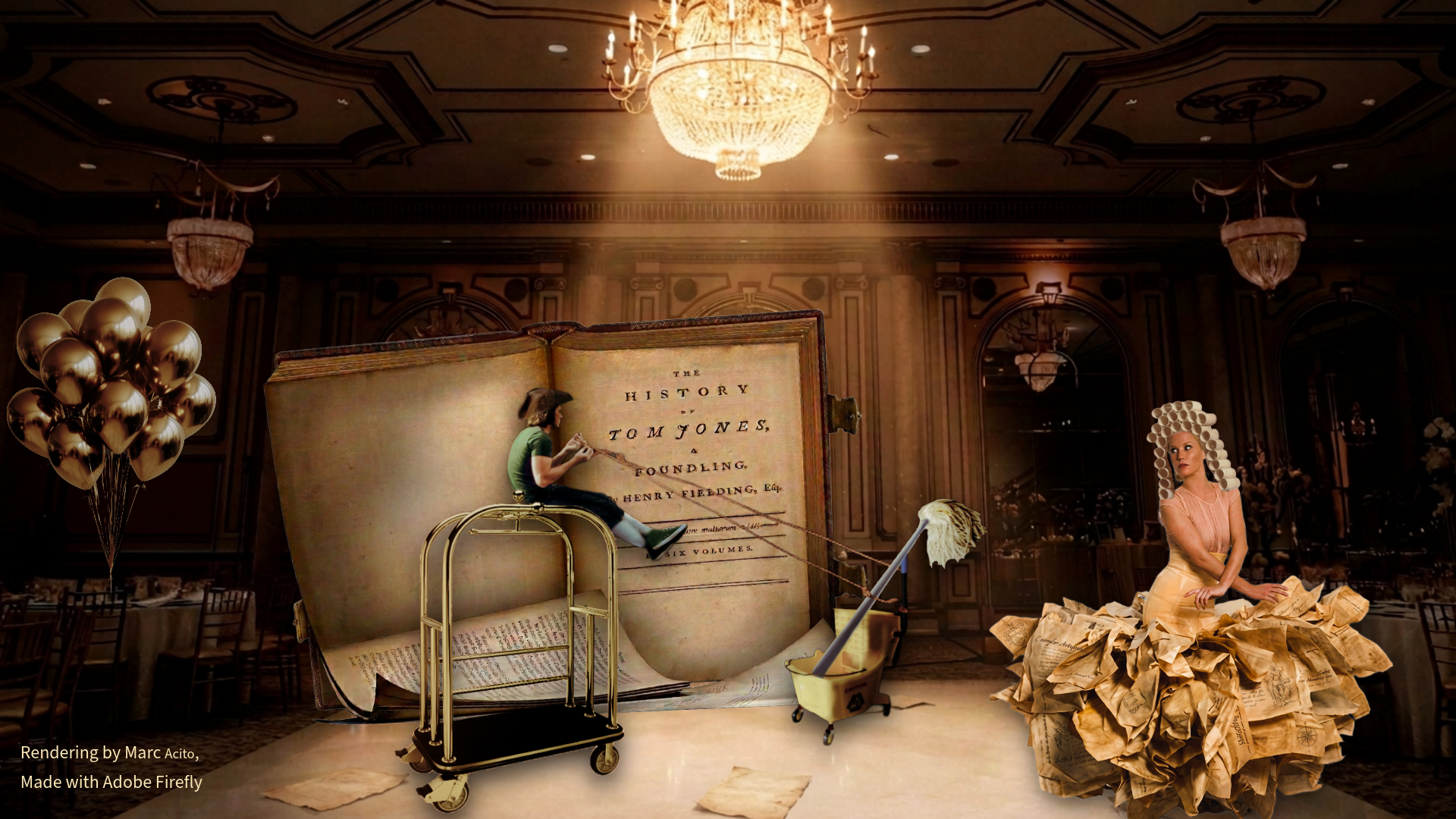
The film’s simple production design focuses on what’s essential to evoke the landscape of the mind.
Musicals give voice to our interior selves, a space unbound from the confines of reality. I believe the artistic latitude of low-budget feature films will liberate musical storytellers constrained by a model that limits our expression.